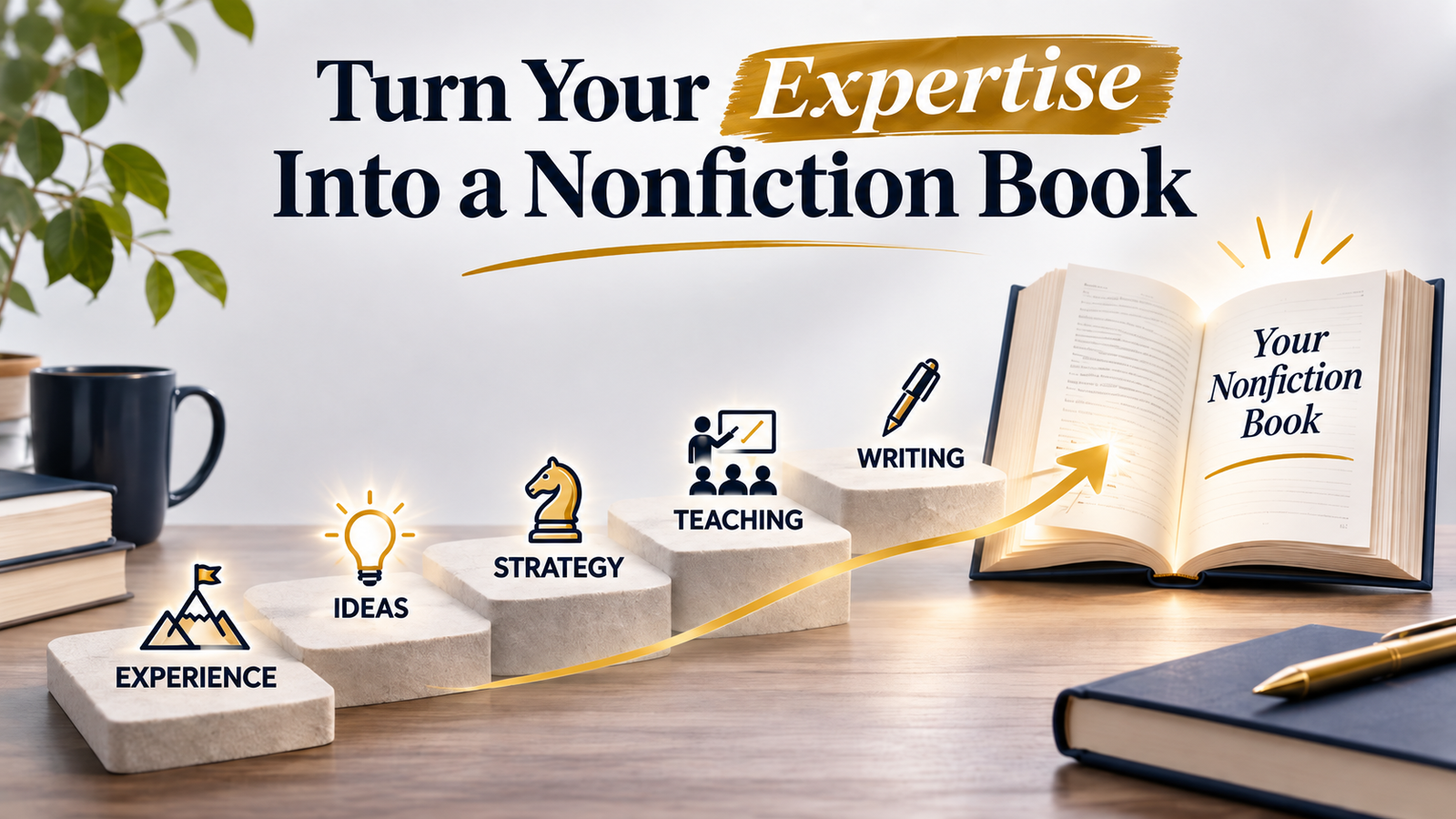
You have an idea for a book. Perhaps you have been thinking about it for years. It may be a collection of stories you want to tell, lessons you have learned, questions you want to answer, or expertise you want to share.
If you are still exploring what your book might be about, start with Have an Idea for a Book? Start Here. That article can help you clarify your subject, think about your reader, and begin gathering the ideas that could belong in your book. For a hands-on method of working through those ideas, use the resource, From Idea to Manuscript Worksheet. It gives you space to capture your thoughts, explore possible directions, and begin organizing the material that may become your book.
Once you have a sense of what you want to write about, the next challenge is giving those ideas enough structure to begin. A book idea rarely arrives neatly organized into chapters. Instead, it may show up as a notebook full of thoughts, files scattered across your computer, stories you keep telling people, research you have saved, or simply a head full of ideas. Somewhere in all of that is a book.
How do you begin shaping it?
You do not need to know exactly how many chapters your book will have or what belongs in the introduction. You do not even need the perfect title. Start by gathering what you already know and giving it enough structure to help you begin writing.
A simple working outline provides direction. Writing individual pieces helps you discover connections, identify gaps, and decide what needs more attention. Your book begins taking shape as you work with it.
Start with What You Already Have
Think about your book idea and ask yourself what you already know about it. What stories come to mind? What questions do people ask you about this subject? What experiences, examples, lessons, instructions, photographs, recipes, research, or other material could be part of your book?
Write those ideas down without worrying about where they belong. Then, look for connections. Which ideas seem to belong together?
Imagine, for example, that you want to create a book about your family’s food traditions. You might begin with Grandma’s handwritten recipe cards. As you think about them, other material comes to mind: Sunday dinners, holiday meals, stories about relatives gathered around the table, and memories of learning to cook beside Grandma.
Those ideas could naturally fall into several groups:
- Recipes: handwritten cards, ingredients, cooking methods, and tips for judging quantities.
- People: Grandma’s stories, relatives who gathered around her table, and memories of cooking together.
- Traditions: Sunday dinners, holiday meals, and customs younger family members may want to continue.
You have just created the beginnings of an outline.
Give Your Book Idea a Working Structure
A working structure helps you turn your book idea into a manuscript one section at a time. Once you see natural groupings, give each one a label. There is no need to invent clever chapter titles yet. “Holiday Meals” works perfectly well as a working heading. Inspiration can make it elegant later.
Now consider how someone might want to move through the material. Would a short introduction to Grandma make the recipes more meaningful? Would it make sense to organize recipes by occasion and weave stories about people and traditions into each section? Try one arrangement and see how it feels.
Your first outline is a working document. You may move chapters, combine sections, add new topics, or remove material that no longer fits. That flexibility is part of the process. The outline’s job is to give your material enough shape to help you decide what to write next.
Write in Chunks
Writing in small pieces is one of the easiest ways to turn your book idea into a manuscript without feeling overwhelmed. Once you have a few working headings, choose one small piece to develop.
Perhaps you are ready to describe how Grandma made bread. You remember her hands working the dough, the flour scattered across the table, and her advice about how the dough should feel. Write that scene while the details are fresh.
If you are developing a practical or business book, choose one question your reader wants answered. Explain a process, describe a common difficulty, or share an example from your experience.
Each is a manageable piece of writing. You do not have to begin with Chapter One. Start wherever you have something clear and useful to say. Several related pieces can eventually become a section or chapter.
In fact, your introduction may be much easier to write after you have developed more of the material it needs to introduce.
Give each piece a simple label and place it beneath the working heading where it seems to fit best. You can always move it later.
Let Writing Show You What Is Missing
Something interesting happens when you begin describing an idea on the page. You discover what you understand well and where you need to think a little more.
A story may bring another memory to mind. An example may reveal a connection between two sections. You may realize that your reader needs an explanation before a set of instructions make sense.
Writing Grandma’s bread recipe, for instance, might reveal a problem with the instruction “add flour until it feels right.”
What does “right” feel like? A younger family member who never stood beside Grandma needs more information. Should the dough feel sticky, soft, firm, or somewhere in between?
Your memory gave you the beginning. Writing the memory showed you what else the reader needs.
These discoveries can guide your next writing session. Add a note to your outline, record a question, or move a passage where it fits more naturally.
Your draft and your outline will grow together.
Allow Time for Research
Writing will also reveal what you do not know. You may need to interview a relative, confirm a date, check a fact, locate a photograph, or find an original source. Keep a research list as those questions arise.
Set aside focused time for research rather than allowing every unanswered question to interrupt your writing.
For the family book, today’s research might mean calling an aunt to ask about a holiday custom. For a business book, it might involve checking the source of a statistic or finding an example that explains a process.
Keep source details with your notes so you can find them again. Clearly mark facts and memories that still need verification.
When a research question appears while you are writing, make a note and keep going whenever possible. Otherwise, a quick search for one missing detail can turn into seventeen open browser tabs and a description of something your book never needed.
When you need to verify published material, original sources are preferable whenever possible. Resources such as the Library of Congress can be useful when researching historical subjects, photographs, or documents.
Begin with a Question Someone Might Ask You
If you are still wondering what to write first, think about the people who might be interested in your subject.
What do they ask you? Which question immediately brings a story, explanation, or piece of advice to mind?
Write your answer as though you are talking to one interested person. Use the language you would use in conversation. Include an example. Then consider what that person might ask next.
You now have something more valuable than an empty page.
You have a piece of your book.
Place it beneath one of your working headings. It may grow into a section, join another piece, or reveal a new topic you want to explore.
That is how an idea gradually becomes a draft.
Pause and Consider
Which part of your book idea feels easiest for you to talk about?
What could you write about that subject today using the knowledge, memories, stories, or material you already have?
Key Takeaway
You do not need a finished outline to turn your book idea into a manuscript.
Start with what you know. Gather your ideas, look for natural connections, and give those groups simple working headings. Then develop one manageable piece at a time.
As you write, you will discover connections, gaps, questions, and possibilities. Those discoveries will help you continue shaping both your outline and your book.
Your Next Step Towards Your Manuscript
Take a blank sheet of paper or open a new document and write your book idea at the top.
List anything that might belong in the book: stories, questions, examples, experiences, instructions, research, memories, or lessons you want to share.
Look over the list and find three or four ideas that seem to belong together. Give that group a simple working heading.
Then choose one item and spend 30 minutes writing about it.
If you encounter something you need to research, leave yourself a note and keep writing. When you finish, save the passage beneath your working heading.
You have moved beyond thinking about writing a book.
You have started writing it.
A Personal Note
I like the moment when a messy page of ideas begins to reveal connections. With my colored markers, I can draw a line from one thought to another and suddenly see a relationship that was not obvious before.
Writing does the same thing.
You can give yourself room to explore without knowing exactly where every idea eventually belongs. Choose a piece that interests you and see where it leads.
You may discover what your book is really about by giving yourself a few pages to find out.