Picture a family gathered around the kitchen table. Someone mentions Grandma’s Sunday dinners, and suddenly everyone has a story. The gravy disaster. The cousin who always arrived late. The recipe that called for “a little flour,” as though flour came with instructions from the ancestors.
Someone laughs and says, “We ought to write a book.” Then the dishes get cleared, everyone goes home, and the idea waits for the next family gathering.
Perhaps your book idea comes from family stories like these. Perhaps it comes from years of helping people solve a problem. Whatever brought it to you, turning that idea into a book begins with giving it shape. Let’s explore what to share and who wants to hear it, then gather the material that can bring your book to life.
Give Your Idea a Starting Point
Begin with one sentence: “I want to write a book about ______.” Write it the way you’d explain it to a friend over coffee.
For example, if you keep thinking about Grandma’s kitchen, start here: “I want to write a book about the food and family traditions I grew up with.”
That sentence puts a pin on the map. As a result, you have a working description that gives you something to explore. As you collect recipes, traditions, and stories that deserve the most attention, you can move the pin.
Who Will Read Your Book?
Imagine telling your idea to someone who leans forward and says, “Tell me more.”
Who is that person? What did you say that caught their attention? Picturing a reader shifts your perspective toward the person who wants to hear what you have to say.
For a memoir for example, picture a granddaughter who remembers family meals and wants to pass traditions to her children. She wants the recipes, and she also wants to know why everyone gathered, who did the cooking, and what made those occasions matter. Her interests help you decide which memories belong in your draft.
On the other hand, for a practical book about starting a business after retirement, picture a woman with well-honed skills and a calendar she finally controls. She wants help choosing a business that fits her life and taking the first steps. Keep her questions beside you as you gather your material.
Decide Your Reader’s Takeaway
Think about what stays with your reader after the last page. Complete this sentence: “After reading my book, I want the reader to ______.”
For instance, a practical book gives your reader a process to follow or a skill to learn. A memoir invites readers into an experience and helps them reflect on their own lives. A family history connects generations through the people and events that shaped them.
For a family traditions book, try: “I want younger family members to recreate our favorite meals and understand the traditions behind them.” That purpose helps you choose what to include. Grandma’s handwritten recipe cards belong, along with the story of how she fed twelve people using a pot that looked barely big enough for four.
Brainstorm Material You Already Have
Now that you’ve identified your subject, your reader, and their desired result, bring them together in a focus question. For the kitchen book, ask, “How can I help younger family members recreate our favorite meals and carry our traditions into their own homes?” For the retirement business book, ask, “How can I help my reader select the best retirement business for her skills and lifestyle, and get started?”
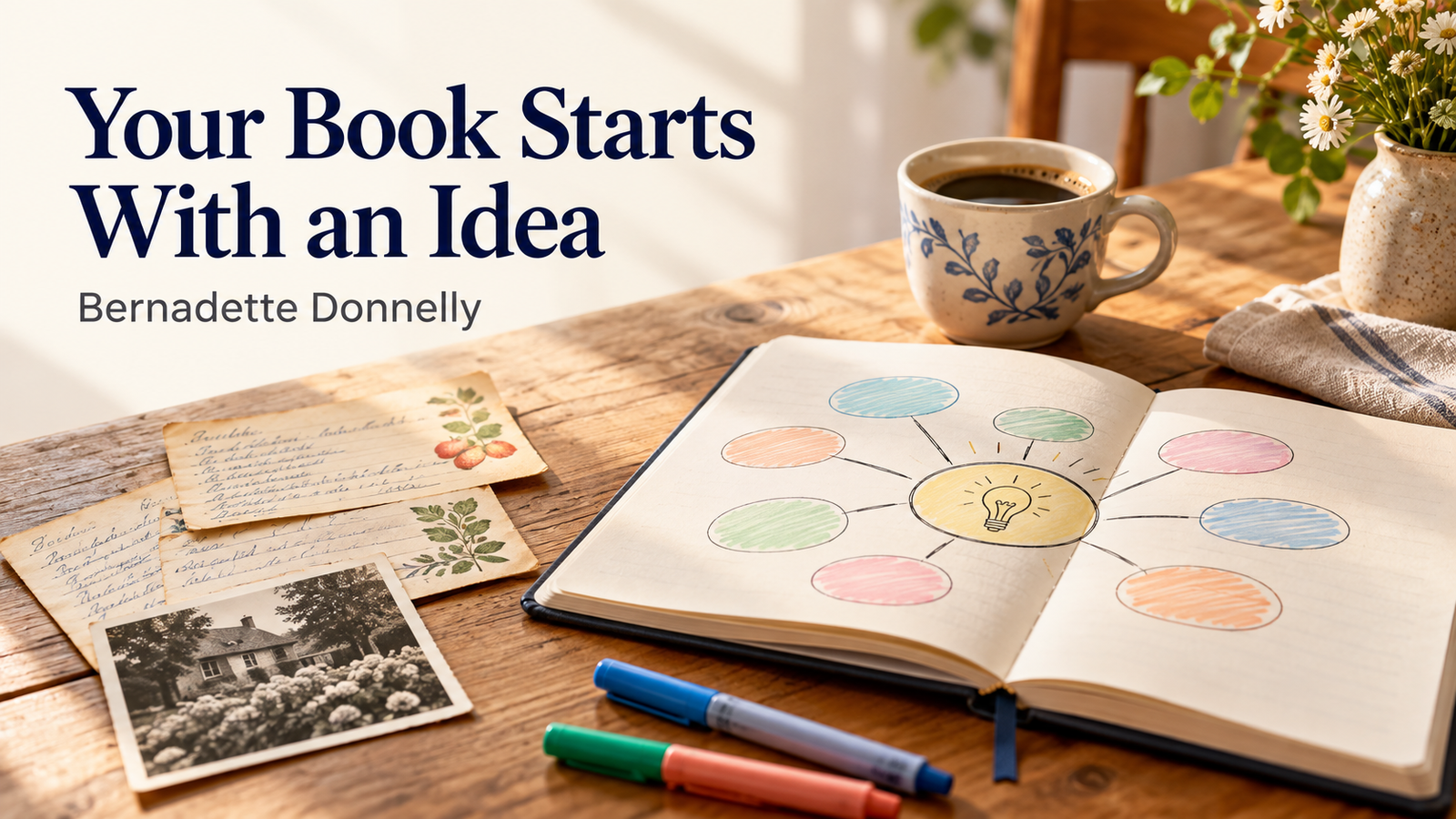
Next, write your question at the top of a blank page or document. Use it to prompt your memory as you collect ideas. A notebook works beautifully; a mind map gives you room to show connections. Choose a method that keeps your thoughts flowing.
When I brainstorm, I grab some blank paper and a bunch of markers. I put ideas in bubbles, use different colors for different streams of thought, and draw lines between related ideas. I call it my brain dump. The page gets wonderfully messy, which is exactly what I want when I’m brainstorming.
Find Stories, Questions, and Details
- Questions people ask you. Recall a conversation when someone wanted your advice or asked about an experience. Write the question and how you answered it, because repeated questions reveal subjects that interest your reader.
- Stories you tell. Collect the cooking tips and kitchen catastrophes, or their equivalents in your subject. Capture what happened, who was involved, and why the experience stayed with you. Include the stories people ask to hear again, because those requests are clues that a story connects.
- Examples that demonstrate your point. Describe a situation that makes an idea understandable. In the kitchen book, show how someone learned to judge the dough by feel when the recipe gave no measurement.
- Research leads. Note facts to verify, relatives to interview, and records to find. Add a question mark beside uncertain information so that you remember to confirm it before publication.
- Details that bring the scene to life. Record names, dates, places, and sensory details. Was the recipe card flour-dusted? Did the kitchen smell of cinnamon? Label remembered dialogue as a recollection and check details where possible.
Sort Your Notes into Possible Sections
Once you’ve collected material, look for ideas that belong together. For example, in the kitchen book, recipe cards and cooking tips form one group. Stories about Grandma and the relatives at her table form another. Holiday customs form a third.
Label those groups “Recipes,” “People,” and “Traditions.” As a result, you have possible sections and a place to put each new discovery. A story about teaching a grandchild to cook connects recipes with traditions; draw a line between them. These connections help you see how the book fits together.
Pause and Consider
As you review your groupings, think about what happens when you share this material in conversation. Stories that bring a laugh, spark a question, or earn a “Tell me more” give you clues about what draws people in.
Which story or piece of advice gets the strongest response when you share it?
What does that response tell you about the person who wants to read your book?
Key Takeaway
Your idea gives you a starting point. A clear reader and purpose help you select material, and brainstorming gives you stories and information to shape into a draft.
Your Next Step
Give yourself 20 minutes to put your idea on paper. Title the page “My Book Idea” and complete three sentences: “My book is about…,” “It is for…,” and “I want readers to….” Together, these answers give you a focus for gathering material.
With that focus in mind, jot down ten stories, questions, lessons, or examples that relate to your book. As you review your notes, circle ideas that belong together and give each group a simple label. These groups begin to reveal the shape of your book and give you a place to add new discoveries.
To guide you through this process, download the “Start with an Idea” worksheet. Use it to explore your idea, identify your reader, and give your book a clear direction.
A Personal Note
I believe many books begin with the experiences we’ve lived and the stories we keep telling. If an idea keeps returning, give it a place on your page. Bring your curiosity. I’ll bring my colored markers.